Follow us on Instagram for all the latest finds and adventures!
One-of-a-Kind Finds
Quality Assured
Sustainable Living
International Delivery
Follow us on Instagram for all the latest finds and adventures!

€ 1.200,00
1 in stock
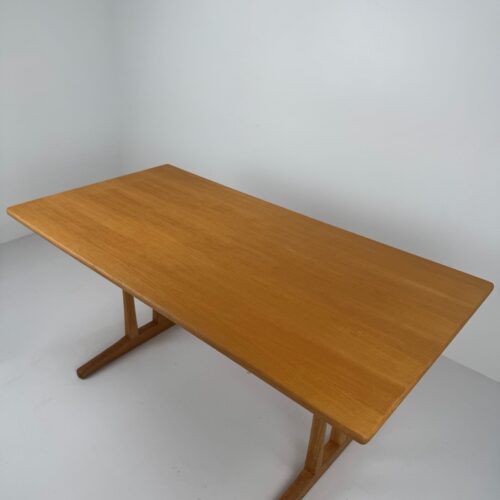
C18 Shaker Dining Table, Børge Mogensen, Denmark, 1960s
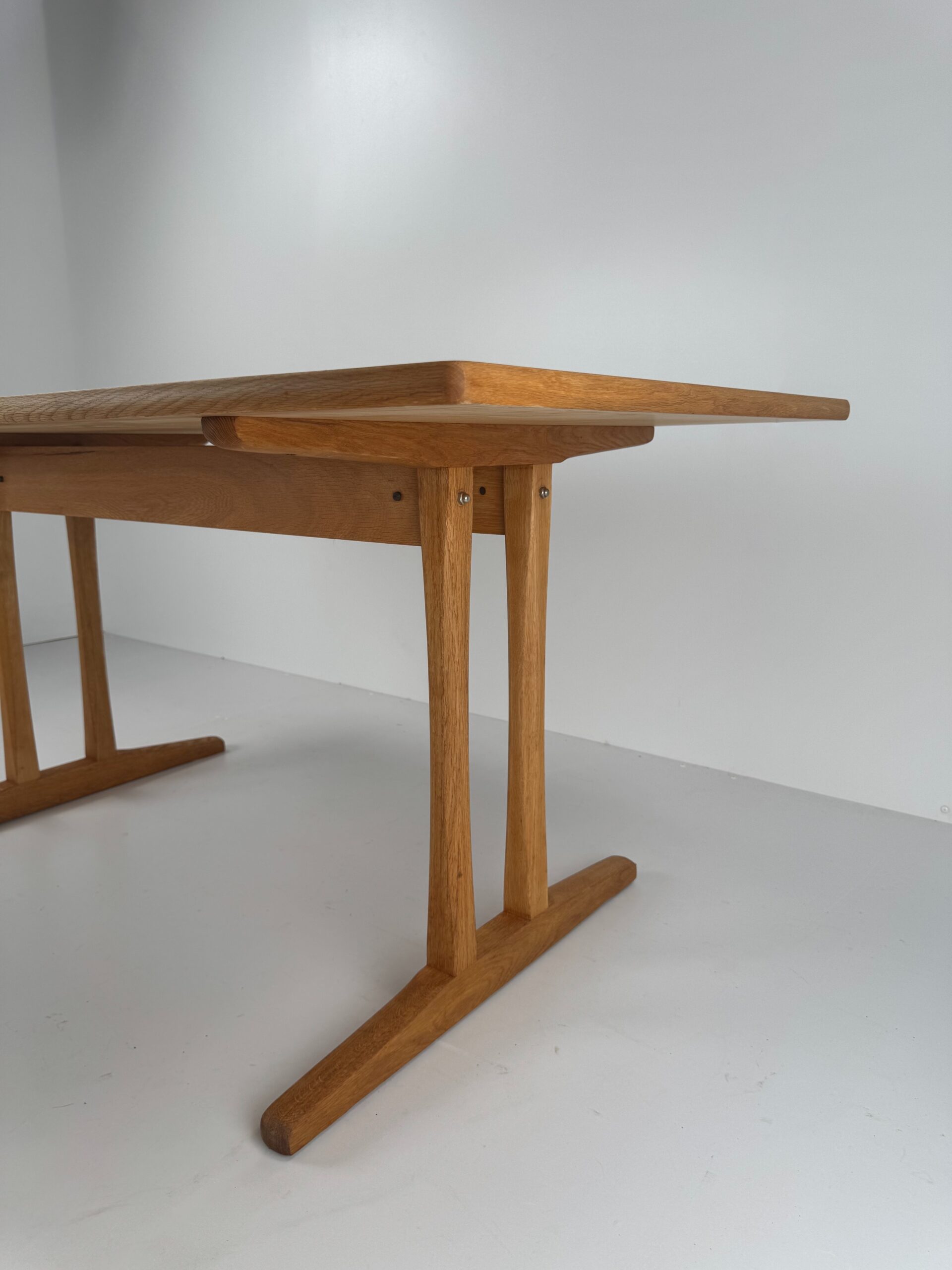
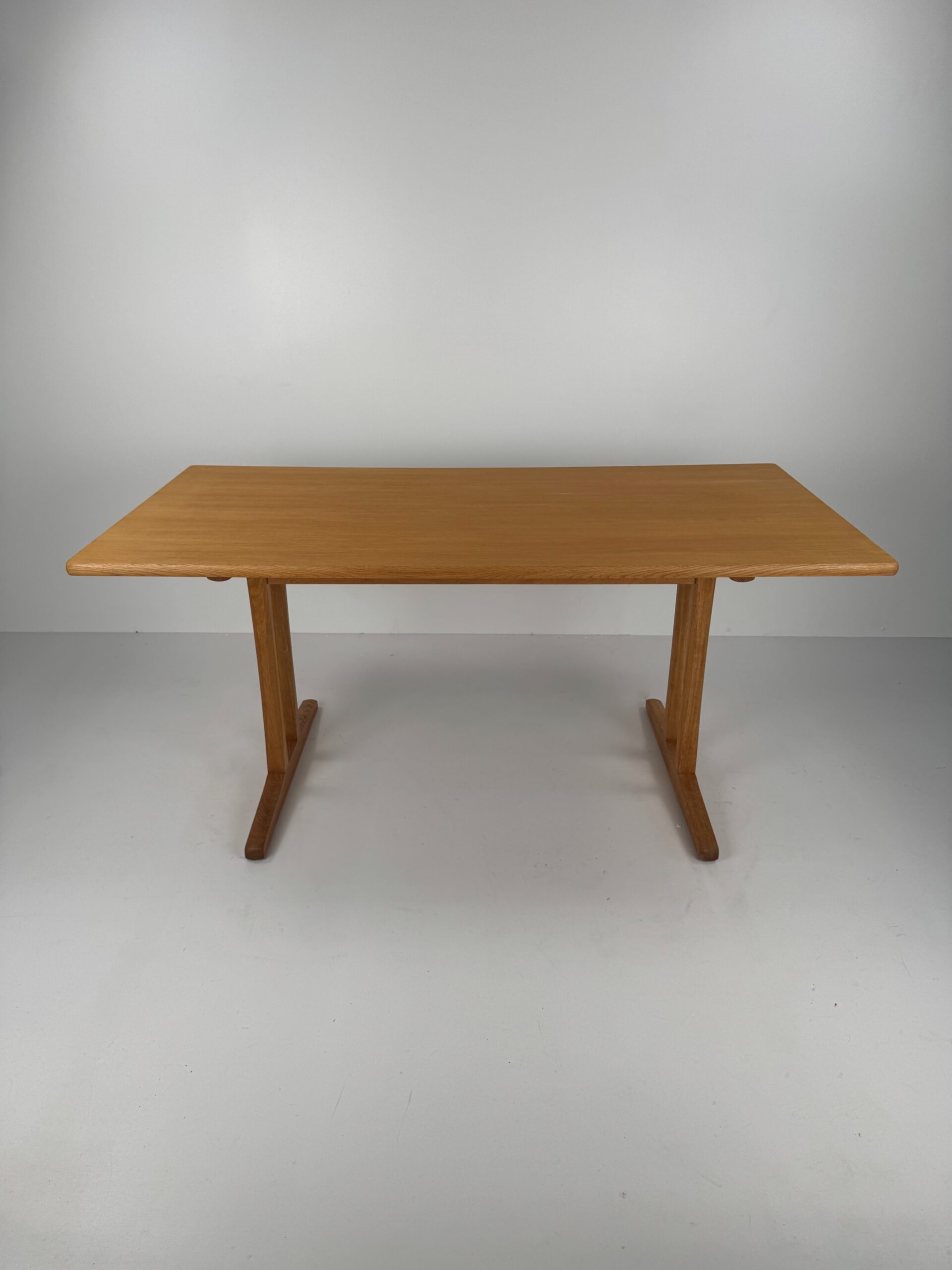
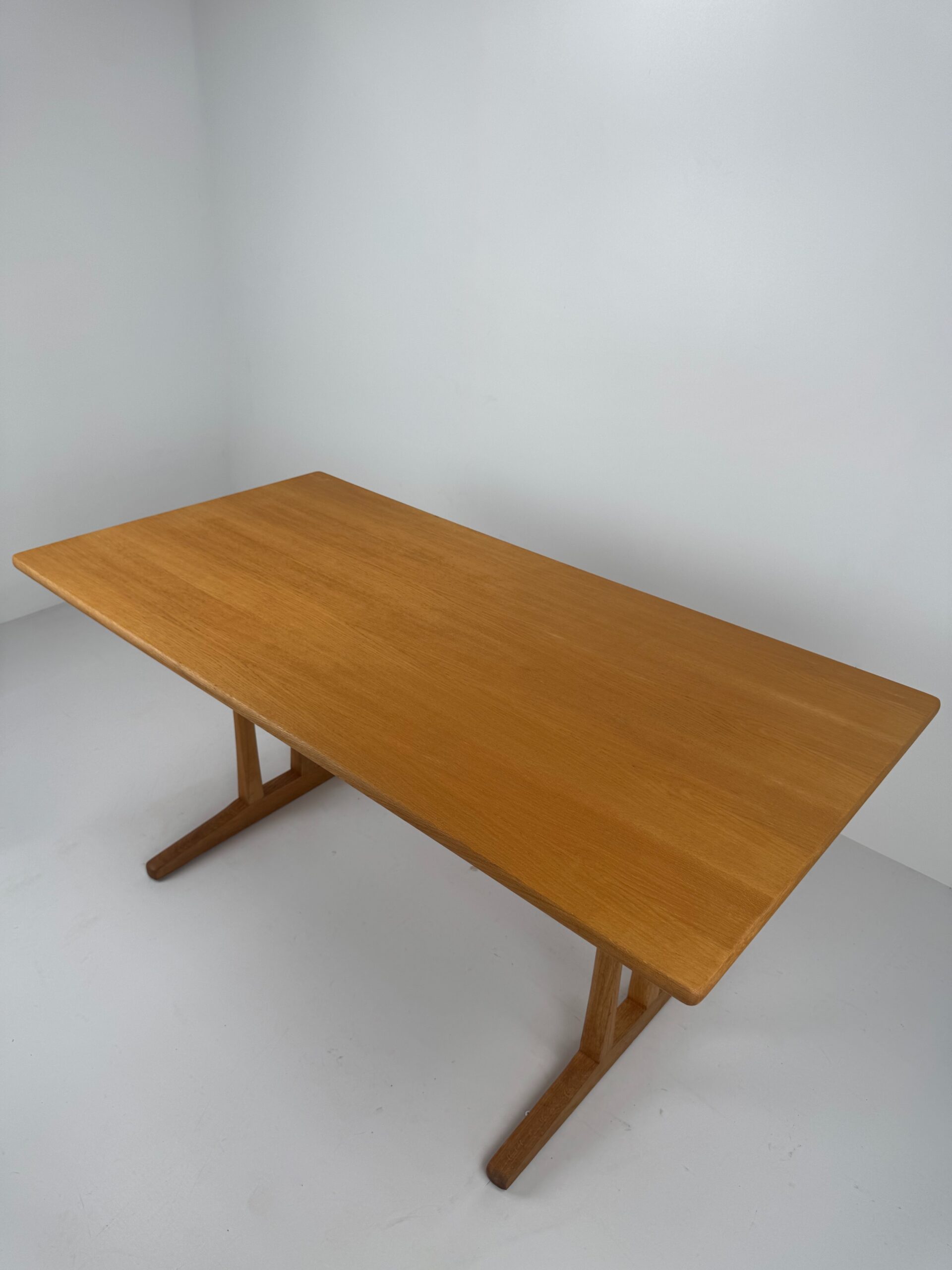
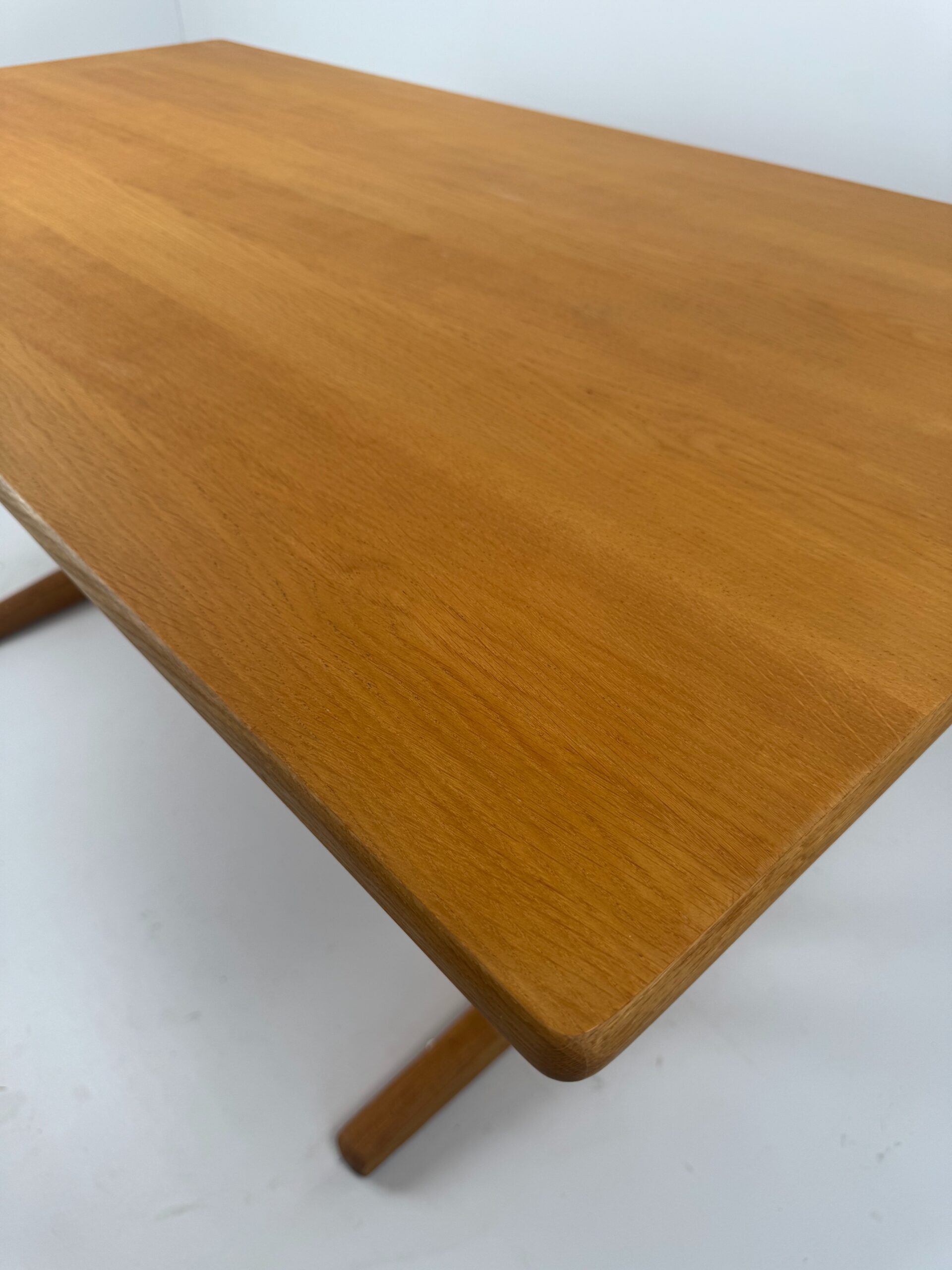
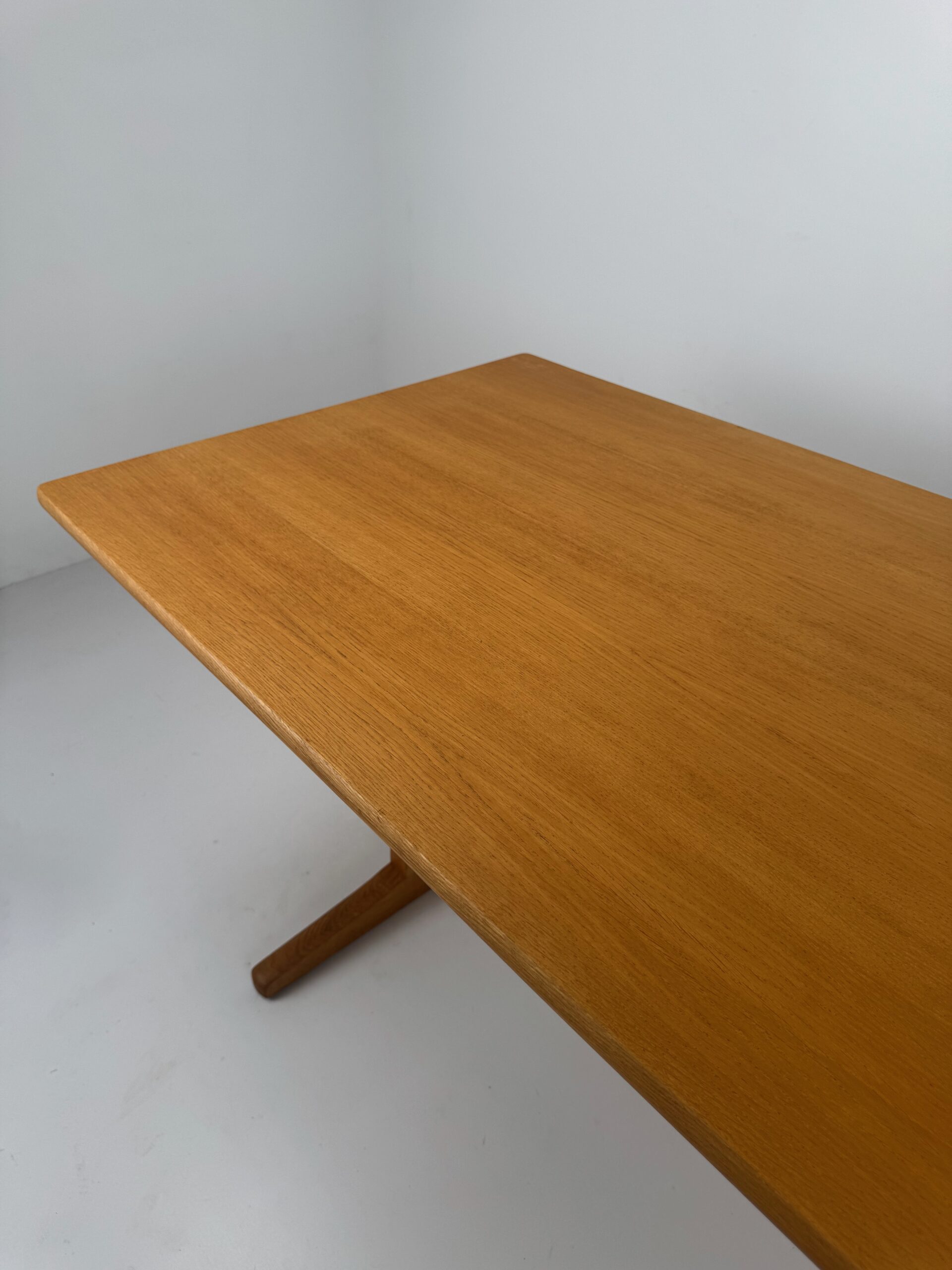
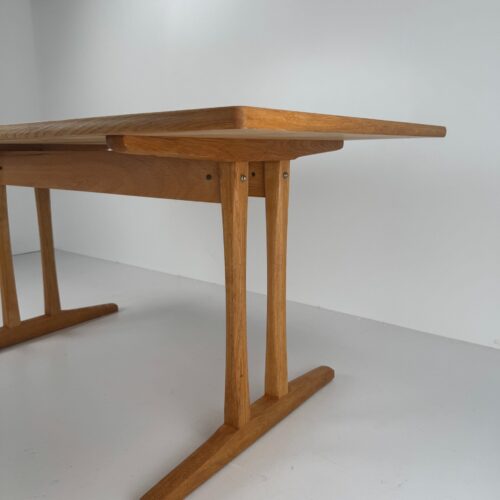
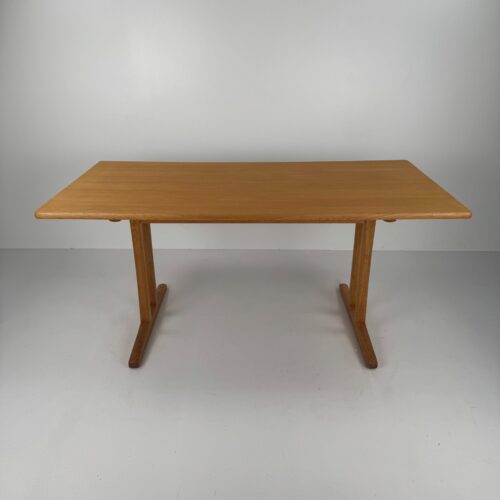
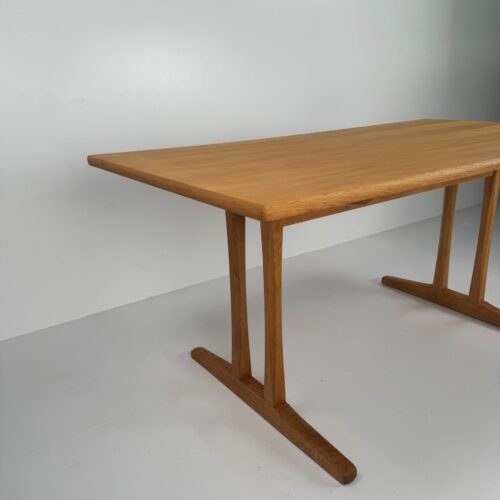
Designed by Børge Mogensen for FDB Møbler, the C18 dining table is built around a clear trestle construction in oak. The broad rectangular top rests on two narrow supports, leaving the space beneath largely open and giving the table a light, well-balanced profile.
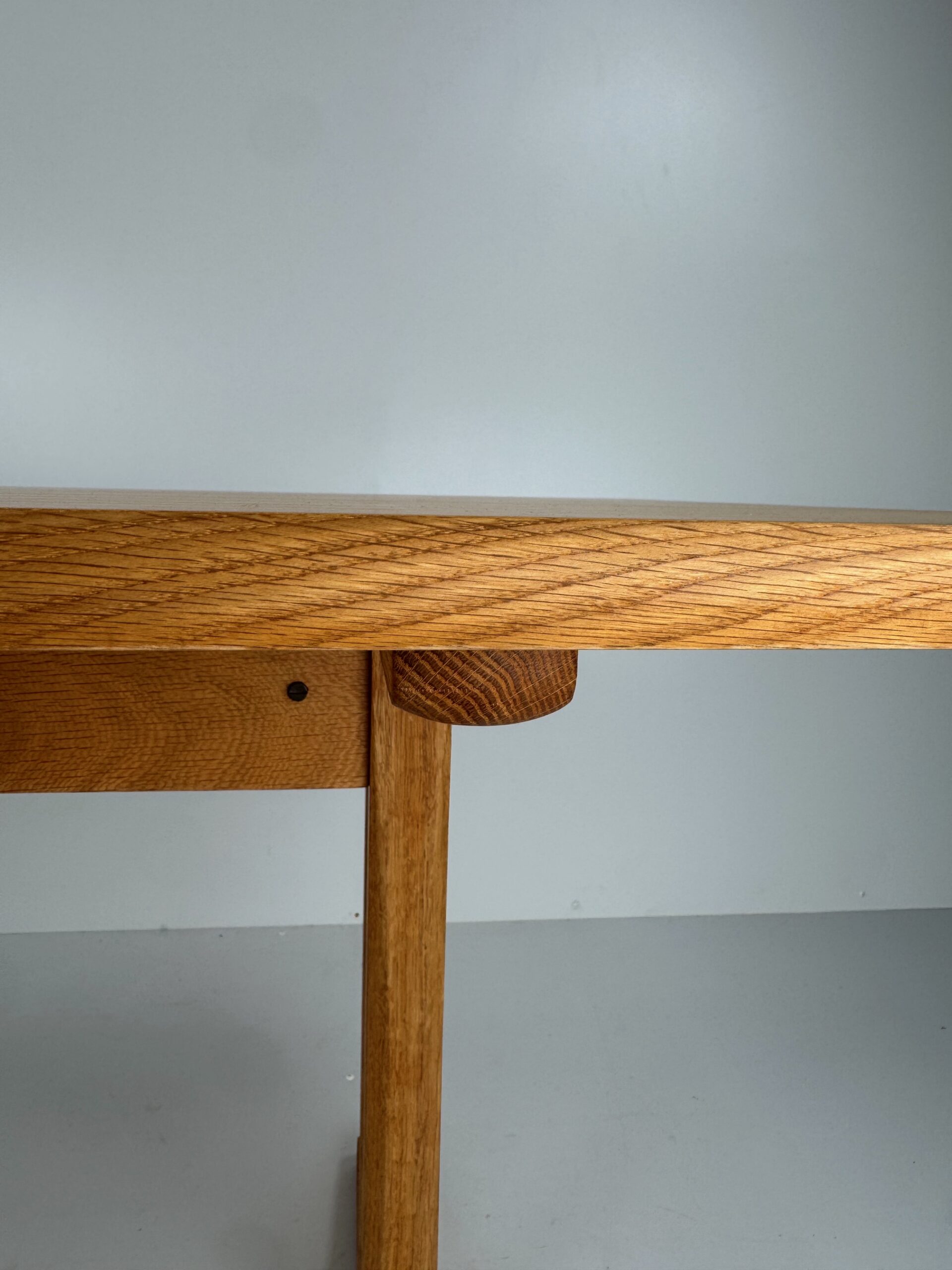
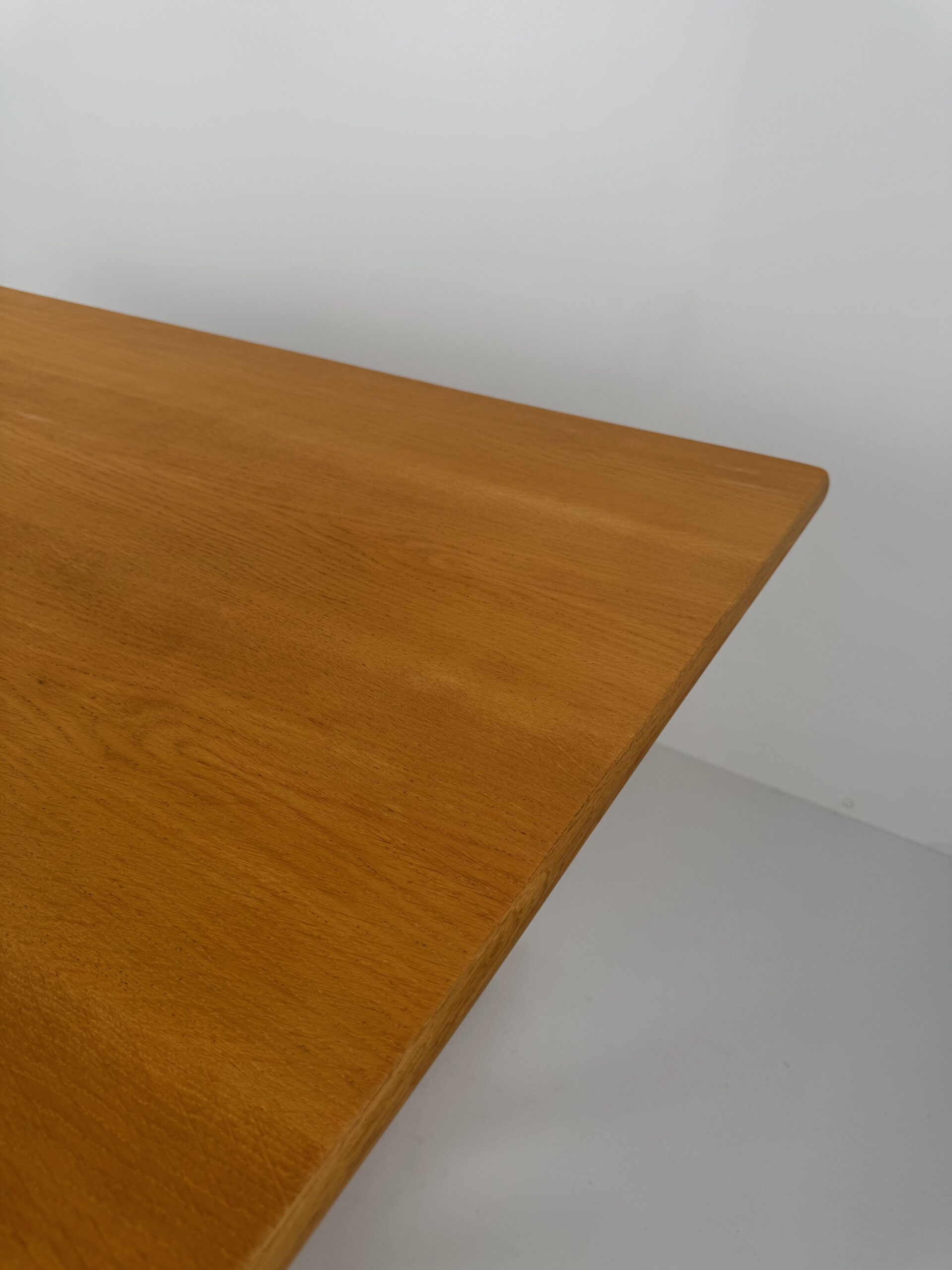
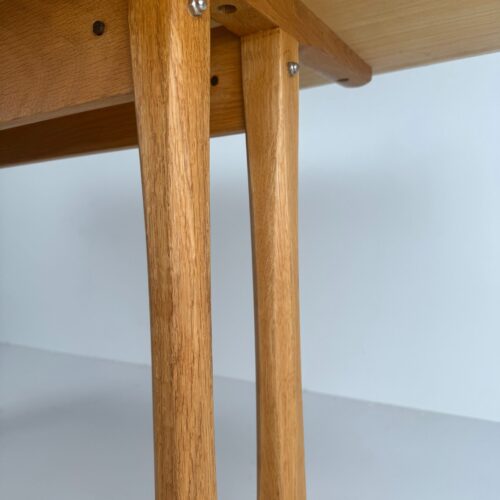
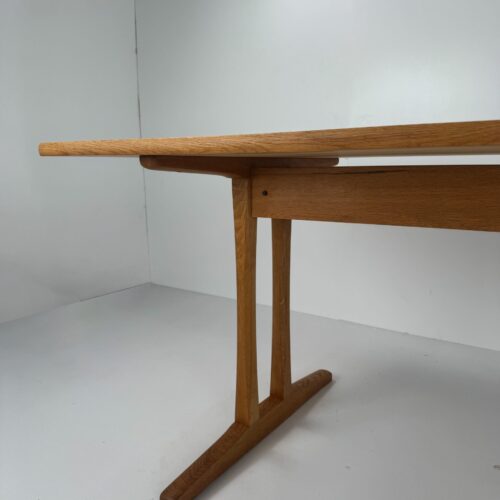
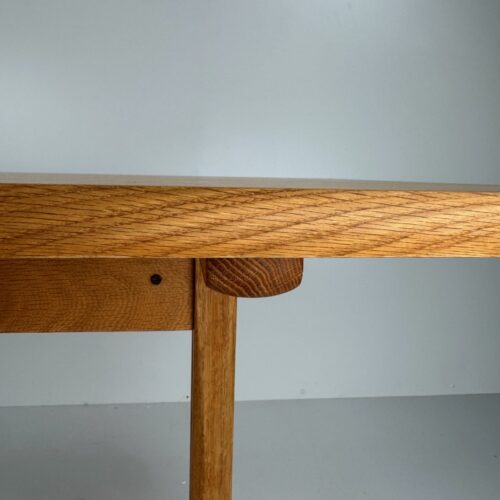
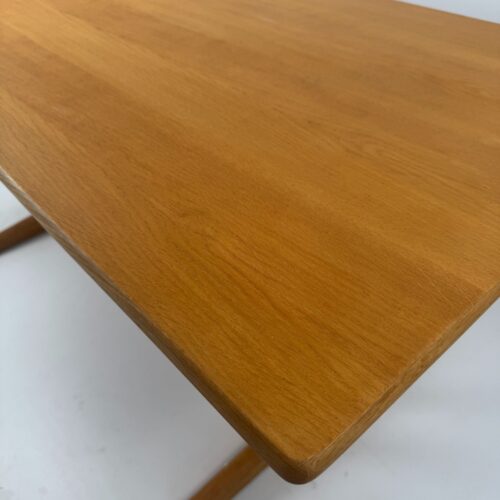
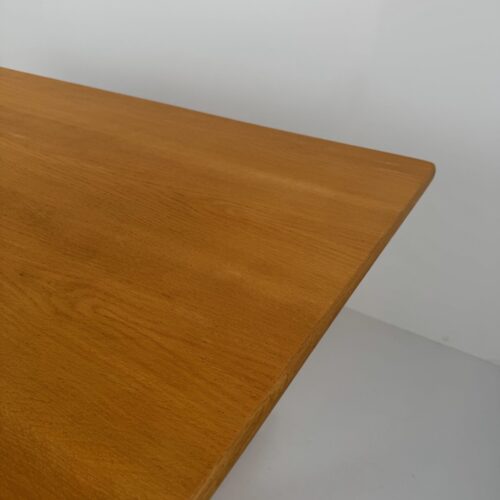
The tabletop has softly rounded corners and a gently shaped edge, with the oak grain running quietly across the surface. Small circular supports beneath the outer edges create a subtle separation between the top and the base. This detail adds depth without interrupting the restrained form of the table.
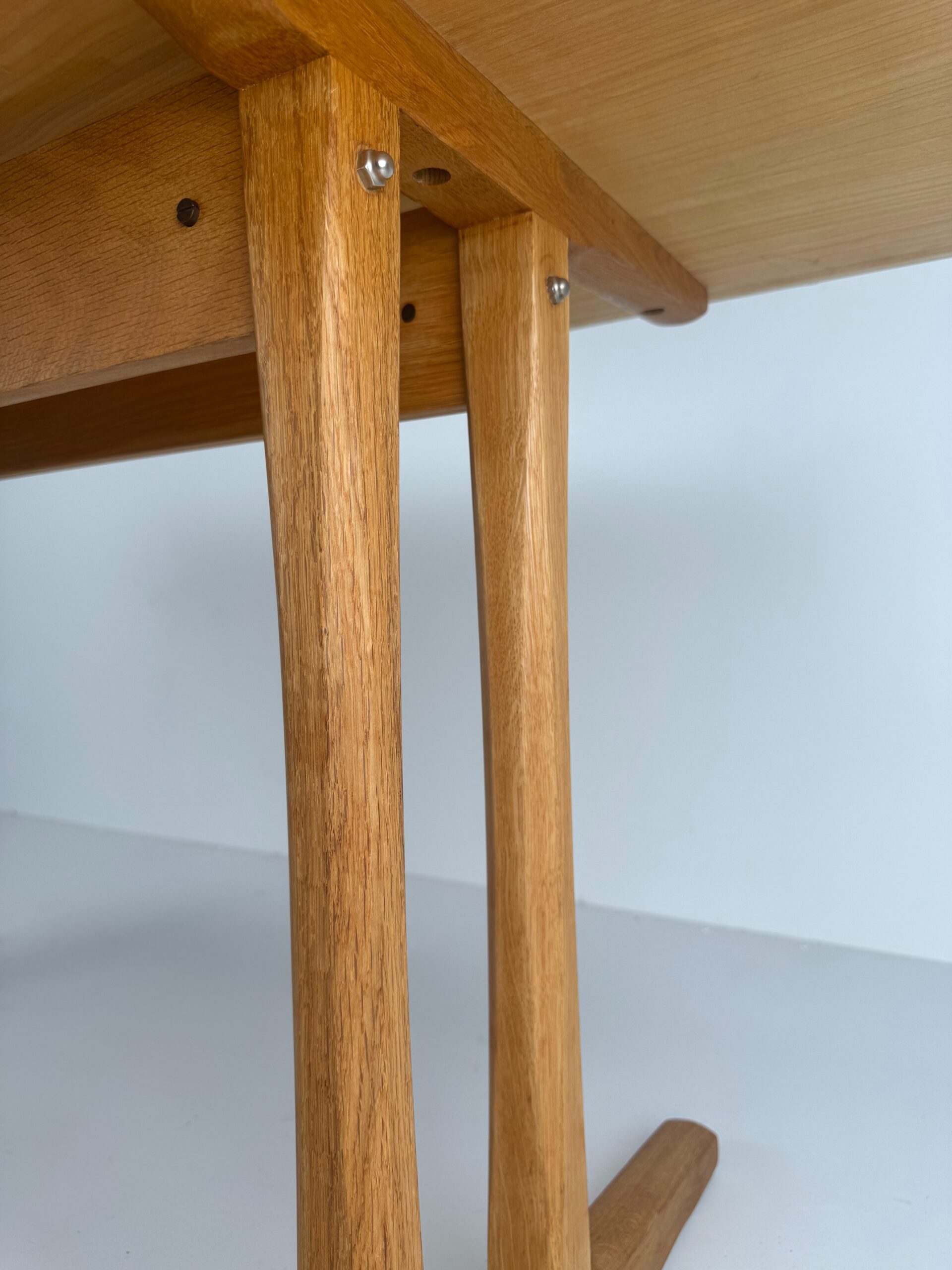
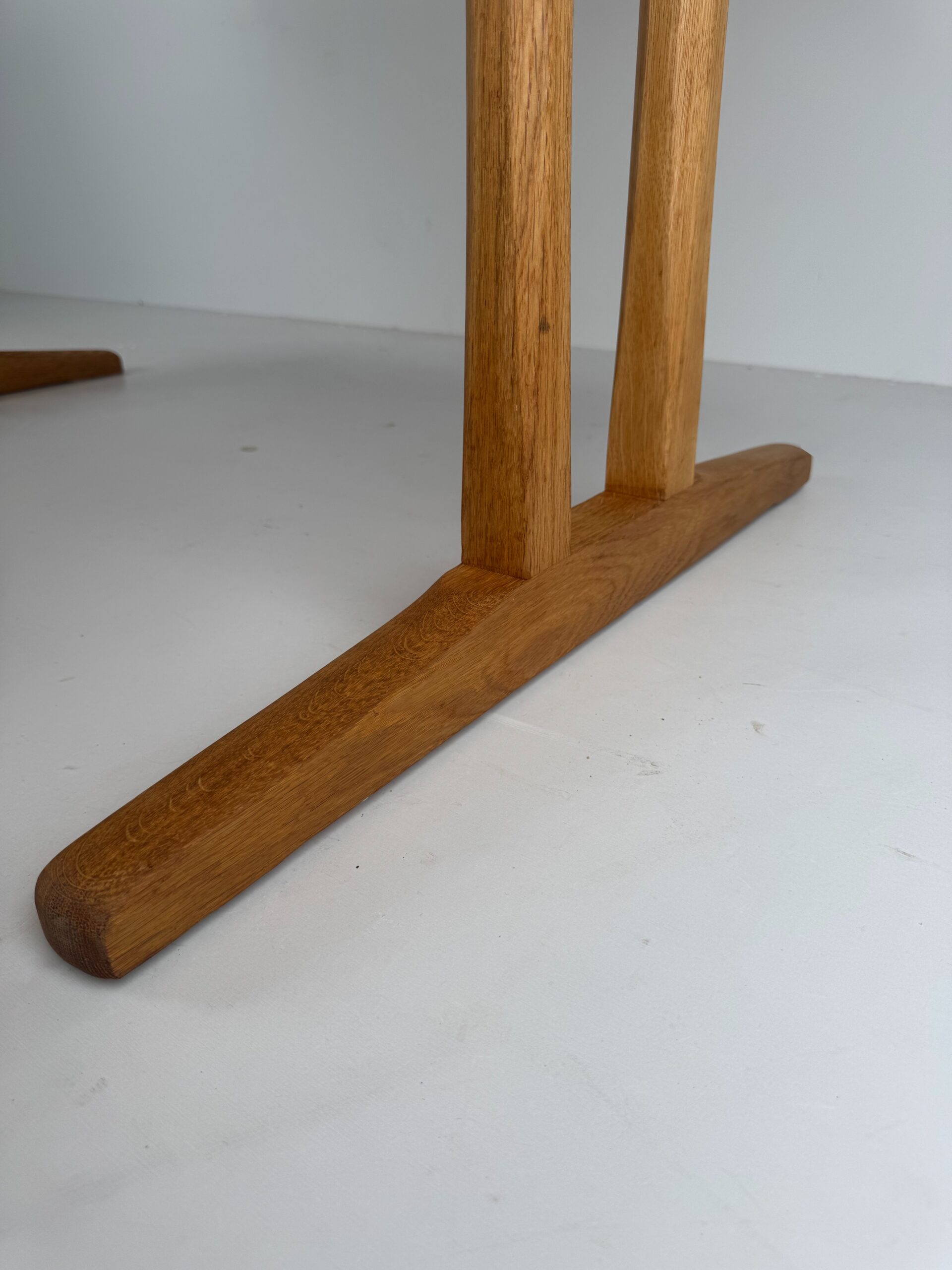
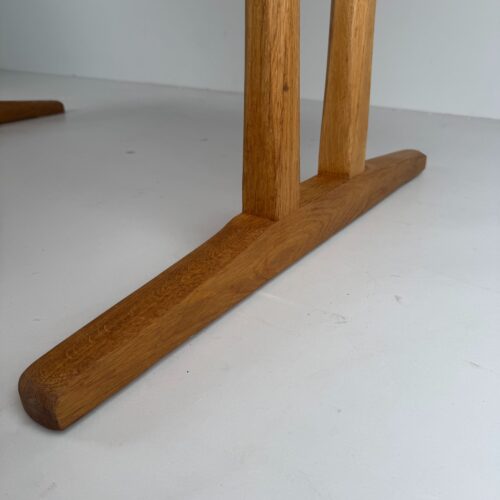
Each trestle consists of two upright posts joined to a long horizontal foot with rounded ends. A central stretcher connects both sides and provides stability while keeping the construction visually simple. The joints and transitions remain clearly visible, reflecting Mogensen’s direct approach to materials and cabinetmaking.
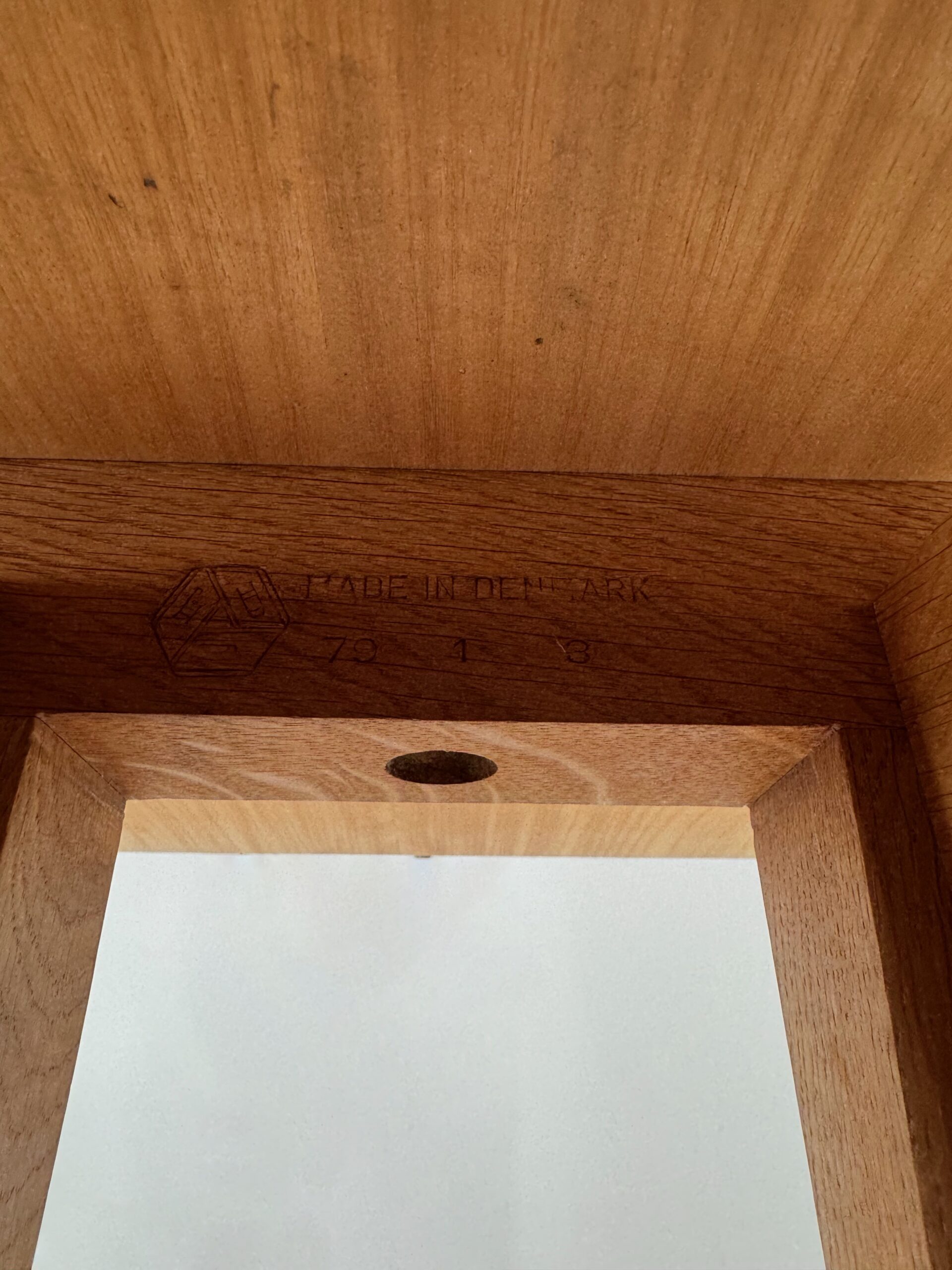
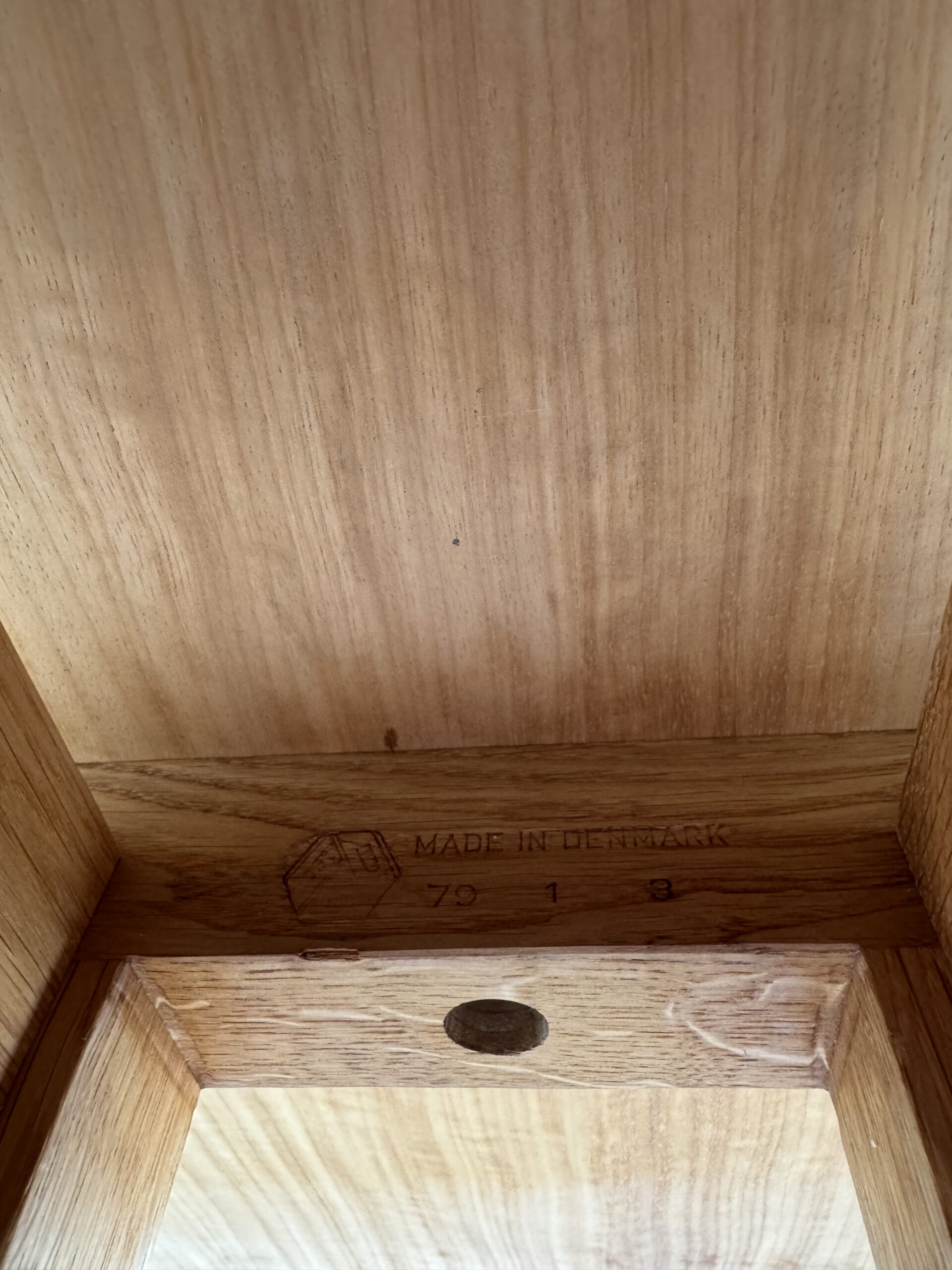
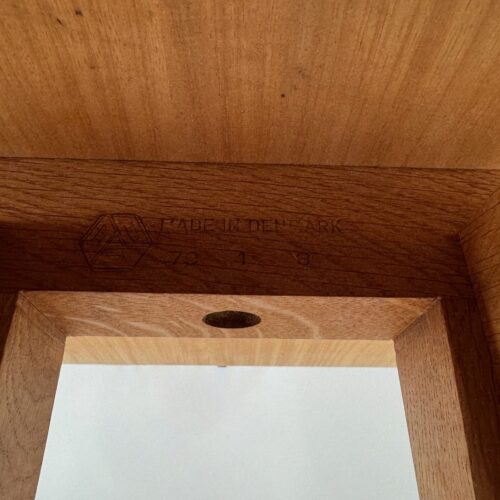
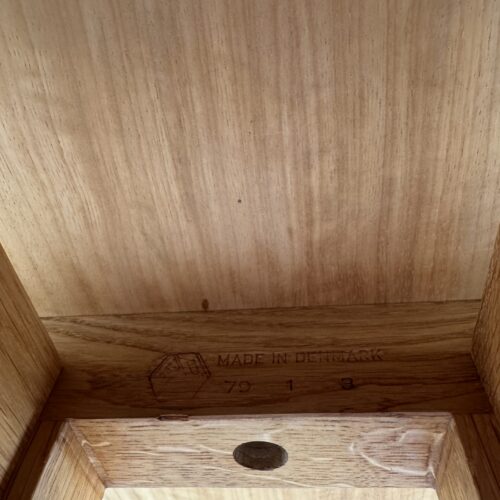
The original FDB Møbler mark is present beneath the top, together with the production number.
Designer: Børge Mogensen
Manufacturer: FDB Møbler
Origin: Denmark
Period: 1960s
Materials: Oak
Dimensions
Height: 73 cm
Width: 160 cm
Depth: 82 cm
Condition
Very good vintage condition with light signs of age and use. The oak surface has an even finish, and the table remains stable and ready for use.
C18 Shaker Eettafel, Børge Mogensen, Denemarken, jaren 60
De C18 eettafel werd door Børge Mogensen ontworpen voor FDB Møbler en is opgebouwd rond een helder schraagonderstel in eikenhout. Het brede rechthoekige blad rust op twee smalle steunen, waardoor de ruimte onder de tafel grotendeels open blijft en het geheel een lichte, goed uitgebalanceerde uitstraling krijgt.
Het tafelblad heeft zacht afgeronde hoeken en een licht gevormde rand, met een rustige eikenhouttekening over het oppervlak. Kleine ronde steunen onder de buitenste delen van het blad zorgen voor een subtiele afstand tussen het blad en het onderstel. Dit geeft de constructie extra diepte zonder de ingetogen vorm te onderbreken.
Elke schraag bestaat uit twee verticale staanders die zijn verbonden met een lange horizontale voet met afgeronde uiteinden. Een centrale regel verbindt beide zijden en geeft de tafel stabiliteit, terwijl de constructie visueel eenvoudig blijft. De verbindingen en overgangen zijn duidelijk zichtbaar en passen bij Mogensens directe benadering van materiaal en meubelbouw.
Aan de onderzijde is de originele stempel van FDB Møbler aanwezig, samen met het productienummer.
Ontwerper: Børge Mogensen
Fabrikant: FDB Møbler
Herkomst: Denemarken
Periode: Jaren 60
Materialen: Eikenhout
Afmetingen
Hoogte: 73 cm
Breedte: 160 cm
Diepte: 82 cm
Conditie
Zeer goede vintage conditie met lichte gebruikssporen passend bij de leeftijd. Het eikenhout heeft een egale afwerking en de tafel is stabiel en direct klaar voor gebruik.

FDB Møbler occupies a unique place in the history of Danish furniture design. Rather than producing exclusive furniture for a limited audience, the company was founded on the belief that well-designed, well-made furniture should be available to everyone. Throughout the twentieth century, FDB Møbler became one of the driving forces behind Danish Modern, commissioning some of Denmark's most influential designers and bringing thoughtful, functional furniture into thousands of homes.
The company traces its roots to FDB (Fællesforeningen for Danmarks Brugsforeninger), the Danish Consumers' Cooperative Society. In 1942, FDB established its own furniture department with the aim of improving the quality of everyday furnishings available to Danish families.
Rather than following changing fashions, FDB focused on creating furniture that combined affordability, durability and honest craftsmanship. This philosophy proved remarkably successful in the years following the Second World War, when Denmark experienced a growing demand for practical, well-designed homes.
Unlike many commercial manufacturers of the period, FDB viewed furniture as part of a broader social mission. Good design was considered a public benefit rather than a luxury, and every decision—from materials to production methods—was guided by this principle.
Functionality has always been at the heart of FDB Møbler. The company embraced the Scandinavian ideals of simplicity, craftsmanship and everyday usability, producing furniture that was designed to be lived with rather than admired from a distance.
Solid wood became one of the defining characteristics of FDB's collection, particularly oak, beech and teak. Construction was deliberately straightforward, with visible joinery, carefully proportioned components and an absence of unnecessary ornament. Every detail served a purpose, resulting in furniture that feels timeless rather than tied to a particular decade.
The influence of traditional Danish cabinetmaking is evident throughout the collection, while many designs also draw inspiration from English Windsor furniture and the honest craftsmanship of the Shaker movement.
Perhaps FDB Møbler's greatest achievement was its collaboration with some of Denmark's most celebrated designers.
The company's first head of furniture design was Børge Mogensen, whose work established much of FDB's visual identity during the 1940s and early 1950s. His philosophy of creating practical, durable furniture for ordinary households became deeply embedded in the company's approach.
After Mogensen established his own studio, the role was taken over by Poul M. Volther, whose designs continued the emphasis on functionality while introducing softer, more organic forms. FDB also worked with notable designers including Jørgen Bækmark, Ejvind A. Johansson, Lisbeth Balslev, Jørgen Kastholm, and several other important figures within Danish Modern.
Many of these collaborations have become landmarks in Scandinavian furniture history and remain highly sought after by collectors today.
Among FDB Møbler's best-known pieces is Børge Mogensen's J39 Chair, often referred to as The People's Chair, a woven dining chair that has remained in continuous production for more than seventy years.
Other celebrated designs include Mogensen's C18 Shaker Table, Øresund Series, and Hunting Table, alongside Poul M. Volther's elegant dining chairs and lounge furniture. Jørgen Bækmark's woven lounge chairs and dining chairs further expanded the collection and remain some of the manufacturer's most recognisable designs.
Although each designer brought their own character, the furniture shares a consistent language of restrained forms, honest materials and careful craftsmanship.
Few manufacturers have had as much influence on the development of Scandinavian furniture as FDB Møbler. By making high-quality design accessible to a wider public, the company helped define what Danish Modern would come to represent both nationally and internationally.
Original vintage pieces remain highly regarded for their quality of construction, thoughtful proportions and enduring practicality. Many of the company's classic designs have been reintroduced in recent years, a testament to the timeless nature of their original concepts.
Today, FDB Møbler stands as one of Denmark's most important furniture manufacturers, remembered not only for the iconic pieces it produced, but for the philosophy that good design should be part of everyday life rather than reserved for a privileged few.
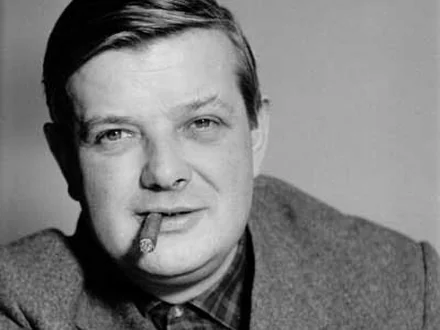
Børge Mogensen is regarded as one of the defining figures of Danish Modern design. Throughout his career he sought to create furniture that was practical, durable and accessible, believing that good design should improve everyday life rather than serve as decoration. His work is characterised by honest materials, balanced proportions and exceptional craftsmanship, resulting in furniture that remains as relevant today as it was when first introduced.
Born in Aalborg, Denmark, in 1914, Mogensen began his career as a cabinetmaker before studying furniture design at the Danish School of Arts and Crafts in Copenhagen. He later continued his education at the Royal Danish Academy of Fine Arts, where he studied under Kaare Klint, widely regarded as the father of modern Danish furniture design. Klint's analytical approach to function, ergonomics and craftsmanship became a lasting influence on Mogensen's work, although he would ultimately develop a design language that was distinctly his own.
Few designers were as committed to everyday functionality as Børge Mogensen. He believed that furniture should be intuitive to use, comfortable over decades of daily life, and constructed with respect for both material and craftsmanship. Rather than chasing changing trends, he focused on timeless forms rooted in traditional woodworking techniques.
Natural materials played a central role in his work. Solid oak, teak, beech, leather and woven cane appear throughout his designs, chosen not only for their beauty but also for the way they age. Inspired by English Windsor furniture, traditional Shaker craftsmanship and Danish cabinetmaking traditions, Mogensen created pieces that feel calm, purposeful and enduring. His furniture rarely draws attention to itself; instead, it quietly becomes part of the architecture and everyday life of a home.
Much of Mogensen's most influential work was created for FDB Møbler, where he served as the organisation's first head of furniture design from 1942. His mission was ambitious yet straightforward: to design high-quality furniture that ordinary Danish families could afford. This philosophy helped shape post-war Scandinavian interiors and established FDB Møbler as one of Denmark's most important furniture manufacturers.
After establishing his own studio in 1950, Mogensen collaborated with several leading Danish cabinetmakers and manufacturers, including Fredericia Stolefabrik, Søborg Møbler, Karl Andersson & Söner, and C.M. Madsen. These partnerships produced many of the pieces that have since become icons of Danish Modern design.
Among Mogensen's most celebrated works is the Spanish Chair (1958), a bold lounge chair combining wide saddle leather with a solid oak frame. Equally iconic is the J39 Chair, often referred to as The People's Chair, which has remained in continuous production for decades thanks to its remarkable simplicity and comfort.
His Hunting Table, Øresund Series, 2213 Sofa, and C18 Shaker Dining Table further demonstrate the breadth of his work, from robust dining furniture to refined seating. Despite their variety, these designs share the same principles of clarity, durability and meticulous craftsmanship.
More than fifty years after his passing, Børge Mogensen's work continues to define the ideals of Scandinavian furniture design. His pieces remain in production, are widely collected internationally, and are represented in museum collections around the world.
What distinguishes Mogensen is not extravagance or stylistic novelty, but restraint. His furniture is designed to be lived with rather than admired from a distance. Built from honest materials, proportioned with care and crafted to endure generations, his work embodies a timeless quality that has become synonymous with Danish design at its very best.
Larger pieces of furniture require a different approach than standard parcel shipping. Items such as sideboards, dining tables, chairs and cabinets are transported by experienced furniture couriers who specialise in handling vintage pieces with care.
Within the Netherlands, delivery is arranged through a selection of trusted partners, including Brenger, as well as local couriers when appropriate. For international deliveries, I work with Magic Movers, a specialist in transporting vintage and design furniture across Europe.
For these items, you'll see "Local Pickup or Courier" as the available delivery option during checkout. Courier costs are not calculated automatically, as they depend on the destination and the size of the item. Once your order has been placed, I'll get in touch with you to discuss the available transport options and provide a quotation before anything is arranged.
Prefer to know the transport costs in advance? Feel free to get in touch before placing your order. Just send me the product you're interested in together with your delivery address or postal code through one of the contact options, and I'll gladly prepare a personalised quotation.
If you prefer, you're always welcome to collect your purchase yourself from the showroom in Vinkeveen. Local pickup is free of charge, and we'll simply arrange a convenient time for collection.
You're always welcome to collect your purchase from the showroom. Simply select Local Pickup during checkout, and I'll get in touch to arrange a convenient time.
The address can be found on our contact page!
The coffee will be ready when you arrive.
Interested in this item? Simply fill out the form below and I'll get back to you with a shipping quotation. Depending on the response time of my transport partners, you can usually expect a reply within 6 to 48 hours.
Please note: Occasionally my emails end up in the spam or junk folder. If you haven't heard back within 48 hours, please check there first. If you'd like a quicker confirmation, feel free to send me a message on WhatsApp, mentioning the item you're interested in and your shipping details.