One-of-a-Kind Finds
Quality Assured
Sustainable Living
International Delivery

Bookcase with Cabinet, Johannes Sorth, Denmark, 1960s

 950,00

1 in stock

SKU: 671 Category: Tag: Brand:
Share this item.

Bookcase with Cabinet, Johannes Sorth, Denmark, 1960s

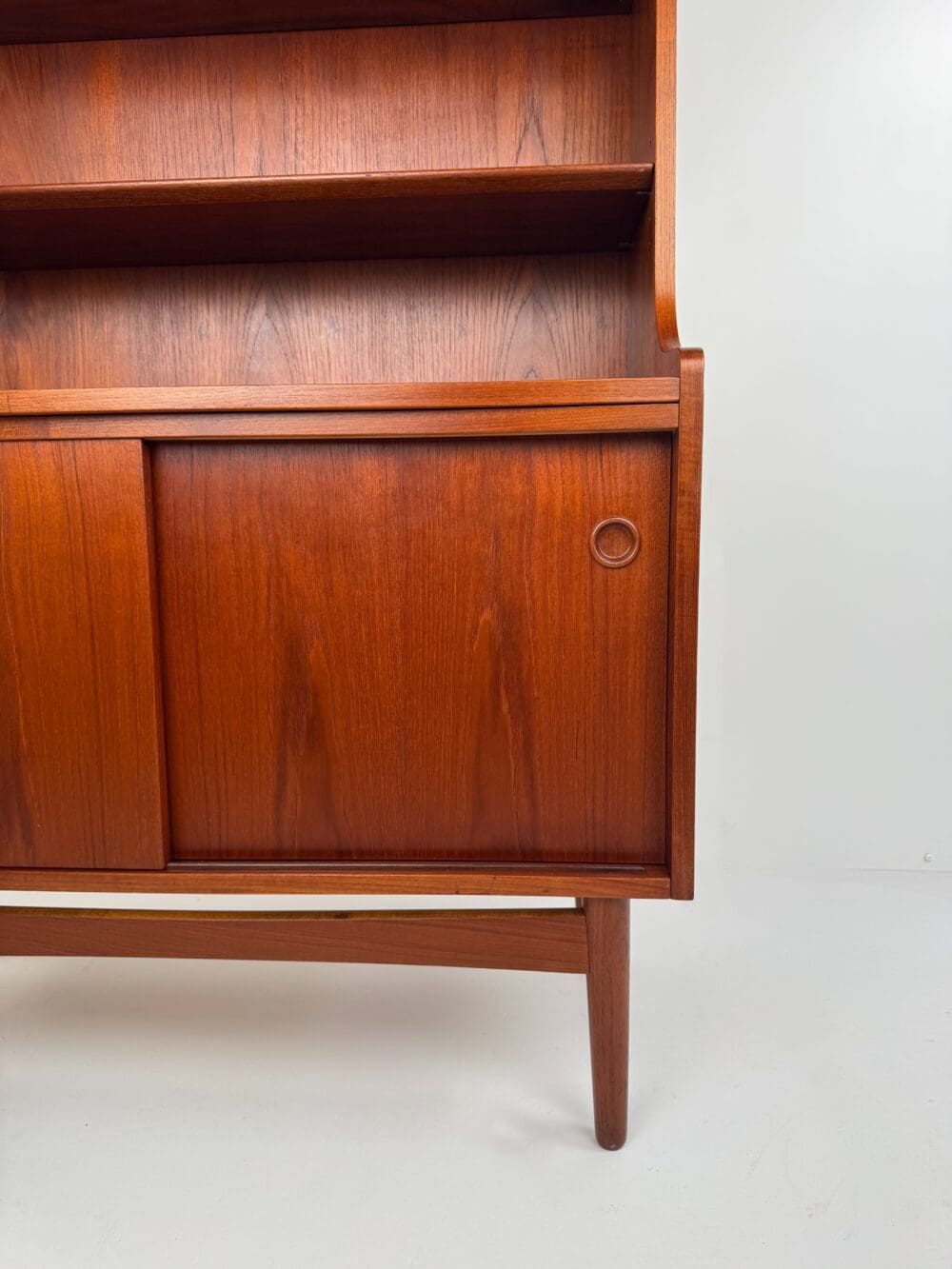
Designed by Johannes Sorth for Nexø Møbelfabrik Bornholm, this elegant bookcase is a wonderful example of the refined proportions and practical functionality that define Danish furniture from the mid-century period. Combining generous open shelving with concealed storage, it offers a timeless solution for both display and everyday use.

Executed in beautifully figured teak, the cabinet showcases warm natural tones and an attractive grain pattern throughout. The softly sculpted side profiles, slender tapered legs and recessed circular pulls lend the piece a light architectural character, while the lower cabinet with sliding doors provides discreet storage for items you prefer to keep out of sight. Three spacious upper shelves offer ample room for books, ceramics or decorative objects, making the cabinet equally suited to a living room, study or dining area.

A beautifully balanced design in which craftsmanship and functionality come together effortlessly.

Designer: Johannes Sorth
Manufacturer: Nexø Møbelfabrik Bornholm
Origin: Denmark
Period: 1960s
Materials: Teak veneer, solid teak

Dimensions
Width: 100 cm
Depth: 42.5 cm
Height: 182 cm

Condition
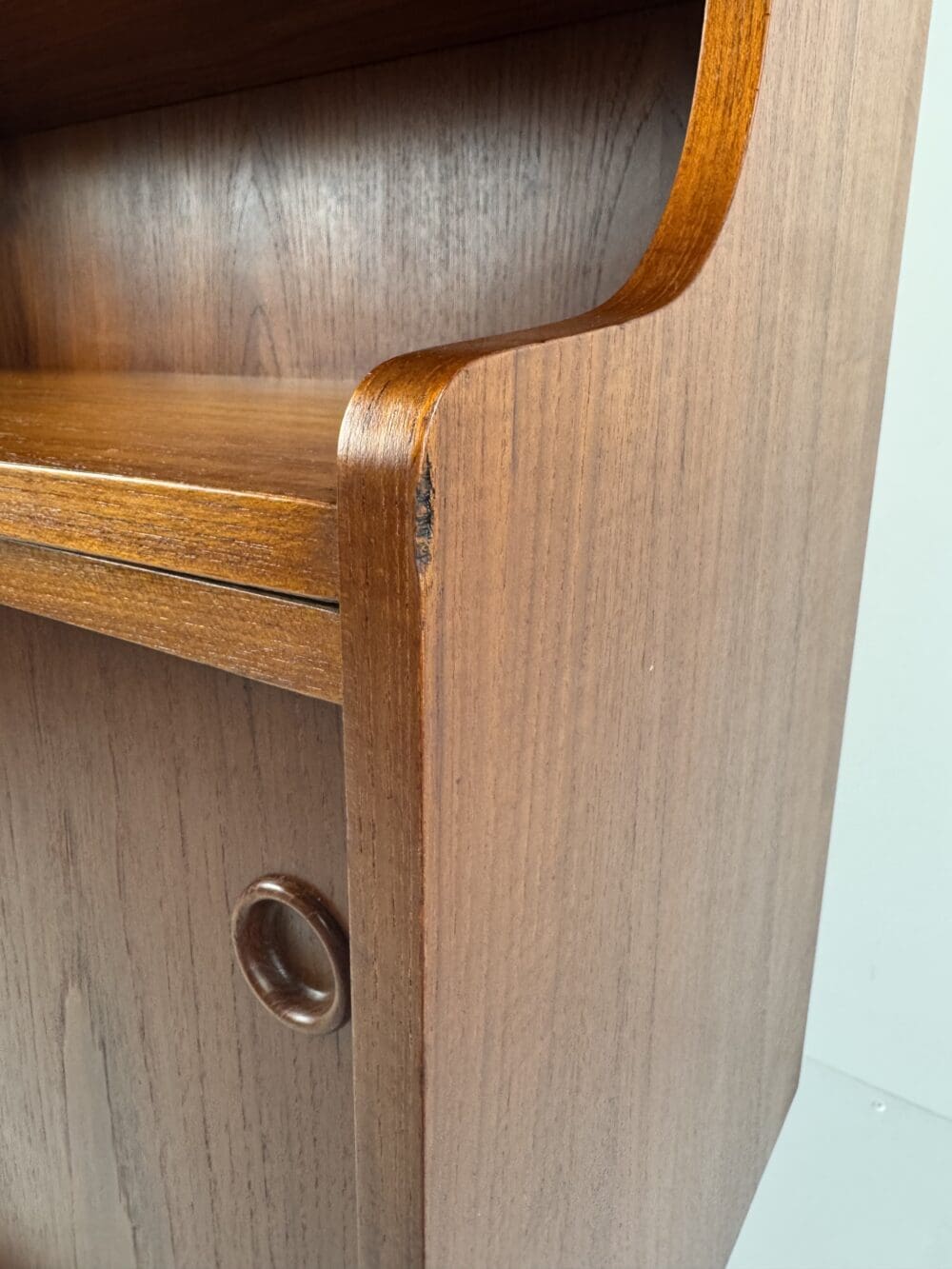
The bookcase is in good vintage condition with normal signs of age consistent with careful use, including a small veneer repair on one side as shown in the photographs. It has been thoroughly cleaned, carefully inspected and treated with high-quality wood oil.


Boekenkast met Onderkast, Johannes Sorth, Denemarken, Jaren 60

Deze elegante boekenkast, ontworpen door Johannes Sorth voor Nexø Møbelfabrik Bornholm, is een prachtig voorbeeld van de verfijnde verhoudingen en doordachte functionaliteit waar Deens meubelontwerp uit de jaren zestig om bekendstaat. De combinatie van royale open schappen en praktische gesloten opbergruimte maakt dit een tijdloos meubel dat zich moeiteloos aan verschillende interieurs aanpast.

Het meubel is uitgevoerd in prachtig generfd teak met warme natuurlijke tinten die doorlopen over het gehele ontwerp. De subtiel gevormde zijpanelen, ranke taps toelopende poten en verzonken ronde grepen geven de kast een lichte, architectonische uitstraling. Achter de schuifdeuren van de onderkast bevindt zich praktische opbergruimte, terwijl de drie ruime bovenste planken volop plaats bieden aan boeken, keramiek of decoratieve objecten. Daardoor komt de kast even goed tot zijn recht in een woonkamer als in een werkkamer of eetkamer.

Een prachtig uitgebalanceerd ontwerp waarin vakmanschap en functionaliteit op vanzelfsprekende wijze samenkomen.

Ontwerper: Johannes Sorth
Fabrikant: Nexø Møbelfabrik Bornholm
Herkomst: Denemarken
Periode: Jaren 60
Materialen: Teakfineer, massief teak

Afmetingen
Breedte: 100 cm
Diepte: 42,5 cm
Hoogte: 182 cm

Conditie
De boekenkast verkeert in een goede vintage staat met normale gebruikssporen passend bij de leeftijd, waaronder een kleine beschadiging aan het fineer aan één zijde, zoals zichtbaar op de foto’s. Het meubel is volledig gereinigd, zorgvuldig gecontroleerd en behandeld met hoogwaardige houtolie.

Nexø Møbelfabrik

Introduction

Nexø Møbelfabrik was one of the many skilled Danish furniture manufacturers that contributed to the international success of Danish Modern during the mid-twentieth century. Based in the harbour town of Nexø on the island of Bornholm, the company became known for producing thoughtfully designed storage furniture that combined practical functionality with the restrained elegance for which Danish cabinetmaking is renowned.

Although never as internationally prominent as manufacturers such as Fritz Hansen or Carl Hansen & Søn, Nexø Møbelfabrik earned a reputation for consistent craftsmanship and carefully executed veneer work. Today, its furniture is appreciated for its enduring quality, balanced proportions and understated design language.

Origins

The company operated from Nexø, one of Bornholm's principal towns, during a period when Denmark's furniture industry experienced remarkable international growth. Throughout the 1950s, 1960s and into the 1970s, Danish manufacturers increasingly collaborated with independent designers to create furniture that reflected modern living while remaining firmly rooted in traditional cabinetmaking techniques.

Like many regional manufacturers, Nexø Møbelfabrik combined mechanised production with a high level of manual craftsmanship. Veneers were carefully selected and matched, solid timber components were precisely finished, and construction methods prioritised durability alongside visual refinement.

While comparatively little archival material survives about the company's history, the quality of its surviving furniture speaks clearly to the standards maintained within the factory.

Design Philosophy

Nexø Møbelfabrik specialised in furniture that was intended to become a natural part of everyday life rather than a decorative statement. Its collections are characterised by calm proportions, practical layouts and an emphasis on honest materials.

Bookcases, cabinets, sideboards and writing desks were designed with flexibility in mind. Adjustable shelving, sliding doors, integrated writing surfaces and concealed storage were incorporated without disrupting the clean architectural appearance of each piece.

The company worked extensively with teak and rosewood veneers, often selected for their distinctive grain and carefully arranged to create harmonious surfaces. Solid wood edging, refined joinery and restrained detailing allowed the natural qualities of the timber to remain the defining feature of the furniture.

Designers and Collaborations

Nexø Møbelfabrik is most closely associated with the designer Johannes Sorth, whose work became synonymous with the company during the 1960s.

Together they developed a wide range of modular bookcases, freestanding cabinets, desks and storage systems that reflected the evolving needs of post-war interiors. Sorth's measured approach to proportion and functionality complemented the manufacturer's emphasis on quality cabinetmaking, resulting in furniture that remains both practical and visually balanced.

While Johannes Sorth is the designer most frequently connected with the company, it is likely that additional in-house and freelance designers also contributed to its catalogue, as was common practice among Danish furniture manufacturers of the period. However, many of these collaborations remain undocumented.

Notable Designs

Among the best-known productions of Nexø Møbelfabrik are its modular shelving systems and bookcases, many of which combine open shelving with integrated desks, sliding-door cabinets or display compartments. These adaptable systems allowed homeowners to create flexible storage arrangements while maintaining a unified architectural composition.

The company's freestanding cabinets and sideboards likewise demonstrate an emphasis on practicality without sacrificing refinement. Sliding doors, carefully proportioned drawer layouts and precisely matched veneers reflect an understanding that everyday furniture should be both functional and visually composed.

Many surviving examples retain the original manufacturer's label, providing valuable documentation of their origin and reinforcing the company's reputation for quality production.

Lasting Influence

Nexø Møbelfabrik represents an important chapter within the wider story of Danish Modern. Although the company never achieved the international recognition of Denmark's largest manufacturers, its furniture embodies many of the principles that made Danish design influential around the world.

Today, collectors and specialist dealers increasingly recognise the quiet sophistication of its work. The combination of thoughtful design, durable construction and carefully selected materials allows these pieces to integrate effortlessly into contemporary interiors while preserving the craftsmanship and integrity of their original period.

Furniture produced by Nexø Møbelfabrik remains a lasting reminder that the success of Danish Modern was built not only by internationally celebrated brands, but also by regional manufacturers whose commitment to quality helped define an entire generation of Scandinavian furniture.

Johannes Sorth

Introduction

Johannes Sorth was a Danish furniture designer whose work reflects the quiet confidence of Scandinavian modernism during the post-war decades. Although less widely known than contemporaries such as Hans J. Wegner, Børge Mogensen or Arne Vodder, Sorth produced a body of work distinguished by its careful proportions, restrained detailing and practical functionality. His furniture was conceived for everyday use, combining honest craftsmanship with an architectural clarity that has allowed many of his designs to remain relevant well beyond their original period of production.

Today, pieces by Johannes Sorth are appreciated for their understated character and the quality of their cabinetmaking. Rather than relying on expressive gestures or decorative elements, his designs demonstrate how proportion, material selection and thoughtful construction can create furniture of lasting appeal.

Early Life

Little has been published about Johannes Sorth's personal life, and much of his career remains relatively undocumented compared with Denmark's most celebrated designers. His work emerged during the height of Danish Modern in the 1950s and 1960s, a period in which furniture production balanced industrial efficiency with the traditions of skilled cabinetmaking.

Sorth developed a close association with Nexø Møbelfabrik, a manufacturer based on the Danish island of Bornholm. Through this collaboration he designed a range of storage furniture that reflected both the technical capabilities of the manufacturer and the enduring values of Danish design.

Design Philosophy

Johannes Sorth's furniture is characterised by balance rather than excess. His designs place equal emphasis on appearance and usability, resulting in pieces that feel carefully considered from every angle.

Many of his cabinets, bookcases and writing desks feature clean architectural silhouettes with subtle details that reward closer observation. Sliding doors, integrated writing surfaces, adjustable shelving and discreet storage solutions are incorporated seamlessly into the overall composition, allowing functionality to become part of the visual language rather than an addition to it.

Sorth frequently worked in richly figured teak and rosewood veneers, using carefully selected grain patterns to introduce warmth and visual depth. Solid timber edging, refined proportions and precisely executed joinery reinforce the impression of furniture designed to endure decades of daily use.

Collaborations

Johannes Sorth is most closely associated with Nexø Møbelfabrik Bornholm, one of Denmark's respected furniture manufacturers during the mid-twentieth century.

Together they produced a wide variety of modular storage systems, sideboards, cabinets, desks and bookcases aimed at modern domestic interiors. These pieces exemplify the Danish approach of combining efficient production with high standards of craftsmanship, making well-designed furniture accessible without compromising quality.

Furniture from this collaboration is often identified by its restrained styling, practical layouts and carefully executed veneering, characteristics that continue to attract collectors of Scandinavian design.

Notable Designs

Among Johannes Sorth's best-known works are his modular bookcases and wall units produced for Nexø Møbelfabrik. These systems offered considerable flexibility, allowing shelving, cabinets and writing surfaces to be arranged according to the needs of the interior while maintaining a unified architectural appearance.

His freestanding bookcases with integrated drop-front desks or sliding-door cabinets remain particularly sought after. These pieces combine open display areas with concealed storage, reflecting the growing demand during the 1960s for furniture capable of adapting to changing domestic lifestyles.

Sorth's work demonstrates that utility need not come at the expense of refinement. Even the most functional elements are integrated with care, resulting in furniture that appears composed rather than purely utilitarian.

Lasting Influence

Although Johannes Sorth has never achieved the international recognition of some of his Danish contemporaries, his furniture has steadily gained appreciation among collectors, dealers and enthusiasts of Scandinavian modern design.

His work embodies many of the qualities that define the Danish Modern movement: thoughtful proportions, honest materials, restrained detailing and an uncompromising commitment to craftsmanship. As interest in authentic mid-century furniture continues to grow, designs by Johannes Sorth are increasingly recognised as enduring examples of Danish cabinetmaking at its most practical and refined.

Delivery

Larger pieces of furniture require a different approach than standard parcel shipping. Items such as sideboards, dining tables, chairs and cabinets are transported by experienced furniture couriers who specialise in handling vintage pieces with care.

Within the Netherlands, delivery is arranged through a selection of trusted partners, including Brenger, as well as local couriers when appropriate. For international deliveries, I work with Magic Movers, a specialist in transporting vintage and design furniture across Europe.

For these items, you'll see "Local Pickup or Courier" as the available delivery option during checkout. Courier costs are not calculated automatically, as they depend on the destination and the size of the item. Once your order has been placed, I'll get in touch with you to discuss the available transport options and provide a quotation before anything is arranged.

Prefer to know the transport costs in advance? Feel free to get in touch before placing your order. Just send me the product you're interested in together with your delivery address or postal code through one of the contact options, and I'll gladly prepare a personalised quotation.

If you prefer, you're always welcome to collect your purchase yourself from the showroom in Vinkeveen. Local pickup is free of charge, and we'll simply arrange a convenient time for collection.

Collection in our Showroom

You're always welcome to collect your purchase from the showroom. Simply select Local Pickup during checkout, and I'll get in touch to arrange a convenient time.

The address can be found on our contact page! 

The coffee will be ready when you arrive.

Request a Shipping Quote

Interested in this item? Simply fill out the form below and I'll get back to you with a shipping quotation. Depending on the response time of my transport partners, you can usually expect a reply within 6 to 48 hours.

Please note: Occasionally my emails end up in the spam or junk folder. If you haven't heard back within 48 hours, please check there first. If you'd like a quicker confirmation, feel free to send me a message on WhatsApp, mentioning the item you're interested in and your shipping details.

Name
Preferred Communication Language